

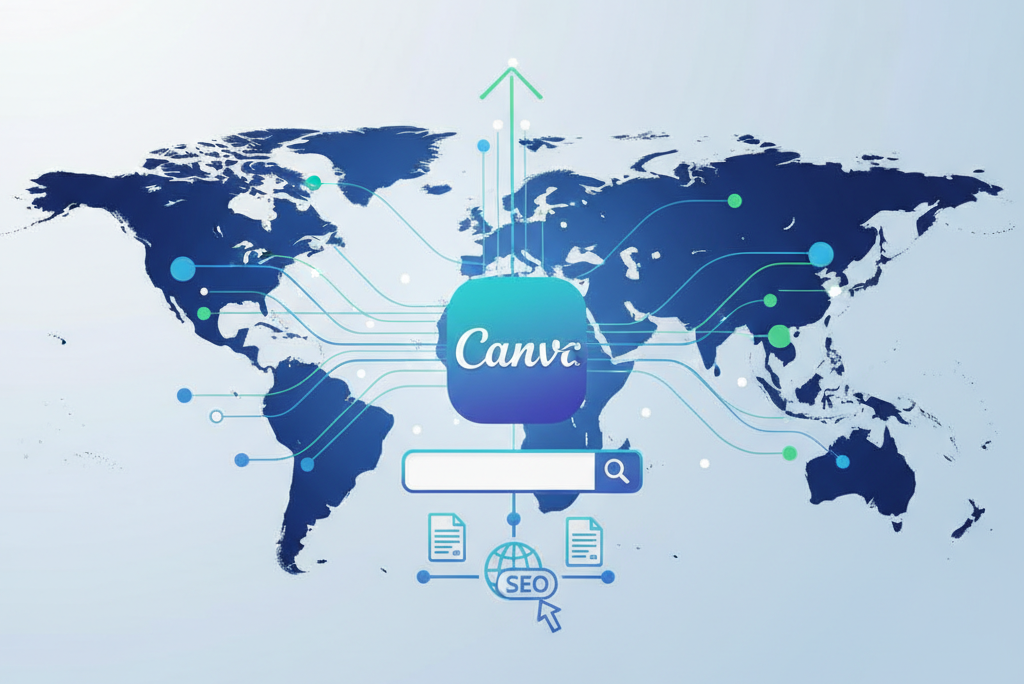
In the fiercely competitive digital landscape, achieving exponential growth and brand dominance requires more than just a great product – it demands a sophisticated, integrated marketing strategy. Few companies exemplify this synergy better than Canva, the online graphic design platform that transformed visual communication. From a startup in Sydney to a global powerhouse valued in the tens of billions, Canva’s journey offers invaluable lessons for business owners, founders, and marketing managers looking to replicate a similar trajectory. This deep dive will dissect Canva’s ingenious blend of product-led content strategy and robust SEO, revealing how these elements propelled them to dominate the visual design market and become a household name.
Canva’s Core Strategy: Democratizing Design
Before diving into the mechanics of their marketing, it’s crucial to understand Canva’s foundational mission: to make design accessible to everyone. This mission isn’t just a tagline; it’s deeply embedded in their product and, crucially, their content. Unlike traditional design software that required extensive training, Canva offered an intuitive drag-and-drop interface, pre-designed templates, and a vast media library. This inherent ease of use made their product highly shareable and, combined with a freemium model, laid the groundwork for a content strategy that naturally fueled user adoption and organic growth.
Their approach wasn’t about marketing a tool; it was about empowering individuals and businesses to solve their design problems, regardless of their skill level. This user-centric philosophy became the bedrock of their content strategy, positioning them not just as a software provider, but as a design partner for millions globally.
The Pillars of Canva’s Product-Led Content Strategy
Canva’s content isn’t just supplementary; it’s an integral part of their product experience and a primary driver of acquisition and retention. They’ve perfected the art of creating content that both educates users and simultaneously showcases the power of their product.
Education and Empowerment Through Content
- Design School & Tutorials: Canva created an extensive “Design School” offering free courses, tutorials, and guides on various design principles, software usage, and marketing best practices. This content wasn’t gated; it was freely accessible, demonstrating expertise and building trust even before users signed up.
- Blog Content Beyond the Tool: While their blog covered product updates, it also delved into broader topics like “Marketing Strategies for Small Businesses,” “How to Create Engaging Social Media Posts,” or “Understanding Brand Identity.” Each piece implicitly or explicitly suggested how Canva could simplify these tasks, turning readers into potential users.
- Visual Inspiration & Ideas: They consistently published content showcasing creative design ideas, trends, and use cases. This aspirational content not only inspired users but also illustrated the versatility of the Canva platform, encouraging exploration and experimentation within the tool itself.
Template-Driven Content Ecosystem
Canva’s templates are arguably their most powerful content asset. These aren’t just static images; they are ready-to-use design solutions that directly integrate with the product. Each template serves as a piece of content, optimized for specific use cases and search intent.
- SEO-Optimized Template Galleries: Canva developed vast libraries of templates for every conceivable need: “Instagram post templates,” “business card templates,” “presentation templates,” “resume templates,” “marketing flyer templates,” and so on. Each category, and often individual templates, became a landing page optimized for specific long-tail keywords.
- Problem-Solution Content: The templates are a direct answer to specific user needs (“I need a quick flyer for my event,” “I need a professional LinkedIn banner”). This “problem-solution” content strategy makes the product immediately useful and relevant, converting searchers into active users.
- Continuous Expansion: Canva consistently adds new templates based on emerging trends, user requests, and seasonal events, ensuring their content library remains fresh, relevant, and ever-expanding to capture new search queries.
Leveraging User-Generated Content (UGC) and Community
Beyond their own creations, Canva expertly integrates user-generated content and community engagement into their growth strategy. This amplifies their reach and builds social proof.
- Design Challenges & Showcases: By encouraging users to share their designs, Canva fosters a vibrant community and generates a continuous stream of authentic content that inspires others.
- Contributor Program: Their template contributor program allows designers to submit templates, expanding Canva’s content library exponentially without direct in-house effort for every single item. This scalable content model is a masterclass in platform leverage.
SEO as the Unseen Growth Engine
While the content is brilliant, it wouldn’t achieve global dominance without a rigorous and intelligent SEO strategy. Canva’s SEO isn’t just about ranking for keywords; it’s about connecting users with solutions at every stage of their design journey.
Keyword Strategy for Visual Search Intent
Canva recognized that people search not just for “graphic design software” but for very specific design needs. Their keyword strategy targeted an immense breadth of long-tail keywords associated with visual tasks:
- “Free Instagram post maker”
- “How to design a logo for free”
- “Best presentation slides ideas”
- “Marketing flyer templates online”
- “Create YouTube thumbnail”
By producing dedicated landing pages (often template galleries) for each of these hyper-specific searches, Canva captured enormous organic traffic from users with high intent. They understood that the journey often starts with a specific design need, not a generic tool search.
Building Topical Authority with Content Clusters
Canva didn’t just create individual pieces of content; they built vast content clusters around core design topics. For instance, a main pillar page on “Social Media Design” would link out to numerous sub-pages and blog posts on “Instagram Story ideas,” “Facebook Cover Photo dimensions,” “Twitter Header templates,” etc. This robust internal linking structure and comprehensive coverage signals to search engines that Canva is an authoritative source on all things visual design, significantly boosting their organic rankings.
This strategy aligns perfectly with modern SEO best practices focused on demonstrating holistic expertise within a niche. At Branding Brains, we guide our clients through developing similar content cluster strategies, ensuring their websites become indispensable resources for their target audiences.
Technical SEO for a Content-Rich Platform
Managing millions of templates, images, and user-generated assets requires impeccable technical SEO. Canva’s platform is optimized for speed, mobile responsiveness, and crawlability. Their internal search functions and robust site architecture ensure that search engines can easily discover and index their vast content library.
- Schema Markup: Implementing schema markup helps search engines understand the context of their content (e.g., indicating templates, tutorials, or courses), potentially leading to richer search results (rich snippets).
- Page Speed Optimization: With so many visual elements, optimizing page load times is critical for user experience and SEO. Canva invests heavily in ensuring their platform remains fast and responsive.
- Mobile-First Indexing: Recognizing that many users access design ideas and even perform light editing on mobile, Canva’s site is fully optimized for mobile, aligning with Google’s mobile-first indexing priorities.
Integrating Product and Content for a Seamless User Journey
The true genius of Canva’s strategy lies in how seamlessly their content and product intertwine to create an irresistible user journey. Content isn’t just for attracting users; it’s for onboarding, education, and retention.
Freemium Model and Content Conversion
Canva’s freemium model allows users to experience the value of the product firsthand, often after being drawn in by educational content or a free template. The premium features (more templates, advanced tools, brand kit functionality) are then presented as solutions to more sophisticated design needs, creating a natural upgrade path. The free content often serves as the initial hook, converting searchers into free users, and then the product experience, enhanced by further content, drives conversions to paid subscriptions.
Content as an Onboarding Tool
When a new user signs up, Canva provides a wealth of in-app tutorials, guides, and template suggestions. This content acts as an extension of their marketing, guiding users to quickly achieve their first “aha!” moment with the product, reducing churn and increasing engagement.
Driving Product Adoption Through Educational Content
Canva continuously publishes articles and guides on how to use their advanced features, often demonstrating their utility through real-world examples. This ensures that users not only sign up but actively explore and utilize the full potential of the platform, fostering deeper loyalty and making them less likely to switch to competitors.
Key Takeaways for Business Owners and Marketers
Canva’s ascent offers actionable insights for any business aiming for significant digital growth:
- Invest in Product-Led Content: Create content that directly helps users achieve goals with your product, or showcases how your product solves a problem. Think beyond simple blog posts; consider templates, tutorials, interactive tools, and guides directly integrated with your offering.
- Embrace a Holistic SEO Approach: Don’t just chase generic keywords. Identify and target the long-tail, problem-oriented search queries your audience uses. Build topical authority through comprehensive content clusters that answer every related question.
- Foster Community and UGC: Encourage your users to create and share. User-generated content provides authentic social proof, expands your content library organically, and builds a loyal community around your brand.
- Think Beyond Traditional Blogs: While blogs are essential, explore other content formats like interactive tools, template libraries, video tutorials, and free courses that naturally integrate with and promote your product or service.
- Integrate Content with User Journey: Ensure your content strategy aligns with the entire customer lifecycle – from awareness and acquisition to onboarding, retention, and advocacy. Content should guide, educate, and empower users at every step.
Unlocking Your Brand’s Growth Potential
The Canva success story isn’t an anomaly; it’s a testament to a meticulously executed digital marketing strategy that puts the user at its core. By understanding user needs, crafting relevant content that showcases product value, and optimizing every piece for search, Canva built an unassailable position in the market.
At Branding Brains, we believe that every business, regardless of its size or industry, has the potential for similar organic growth. Our expertise lies in dissecting complex market dynamics, identifying unique content opportunities, and crafting bespoke SEO and content marketing strategies that drive measurable results. If you’re a business owner, founder, or marketing manager looking to transform your digital presence, attract your ideal audience, and build lasting topical authority, connect with Branding Brains. Let’s strategize how your brand can leverage intelligent content and SEO to achieve its next level of growth and dominate your niche, just like Canva.