

In the dynamic world of digital marketing, where strategies constantly evolve and the noise intensifies, certain brands rise above the rest by not just adapting but by defining entirely new paradigms. HubSpot stands as a prime example, a global leader in CRM, marketing, sales, and customer service software. Their journey isn’t just a testament to building a successful SaaS product; it’s a masterclass in how to scale a business by evangelizing a philosophy: Inbound Marketing. For business owners, founders, and marketing managers seeking to understand enduring growth strategies, HubSpot’s playbook offers invaluable lessons in attracting, engaging, and delighting customers.
The Genesis of a Movement: Defining Inbound Marketing
Before HubSpot, the marketing landscape was largely dominated by “outbound” strategies – interruptive tactics like cold calls, direct mail, and traditional advertising. While effective to a degree, these methods often struggled to build genuine connections with increasingly savvy and digital-first consumers. In 2006, HubSpot co-founders Brian Halligan and Dharmesh Shah introduced and popularized the term “Inbound Marketing,” fundamentally shifting the conversation.
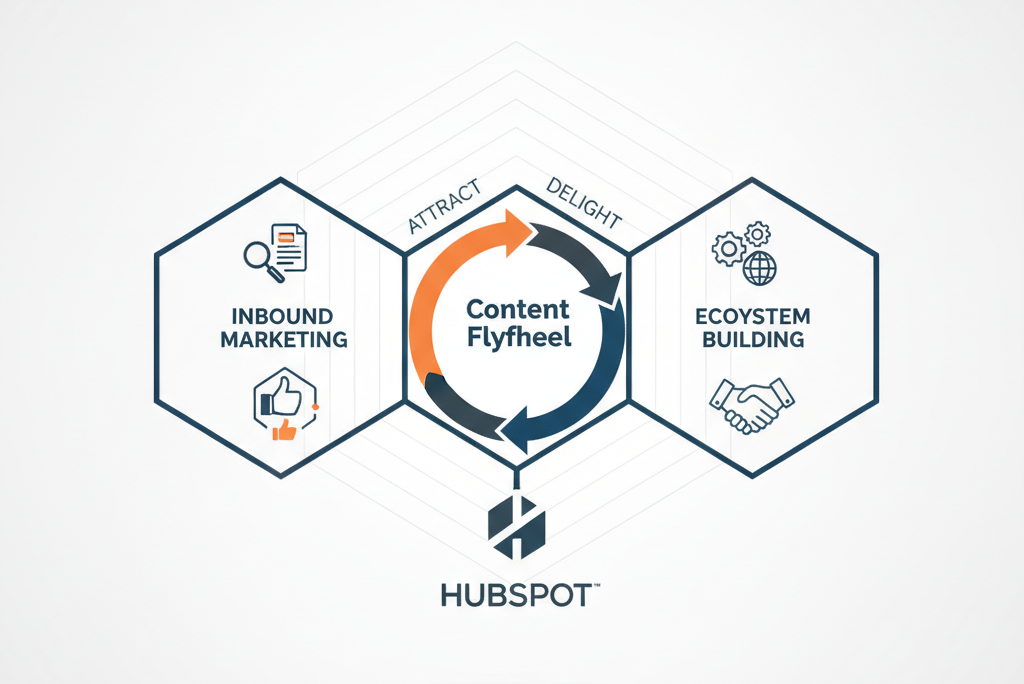
Inbound marketing is a customer-centric approach focused on attracting customers by creating valuable content and experiences tailored to them. Instead of blasting your message out, you create content designed to address the problems and needs of your ideal customers. This philosophy is encapsulated by HubSpot’s “flywheel” model, replacing the traditional sales funnel. The flywheel emphasizes that customer success fuels business growth, with satisfied customers becoming promoters who drive new leads.
- Attract: Creating valuable content and experiences that pull customers in. This includes blogs, SEO, social media, and video.
- Engage: Building relationships by providing insights and solutions that align with their goals and challenges. This involves CRM, email marketing, and conversational tools.
- Delight: Providing outstanding service and support that makes customers happy and encourages them to become promoters. This includes customer service, feedback loops, and personalized support.
This paradigm shift was more than just a marketing tactic; it was a business strategy that put the customer at the heart of every operation, a lesson crucial for any enterprise aiming for sustainable growth.
HubSpot’s Content Flywheel: The Engine of Authority and Leads
At the core of HubSpot’s monumental success is its relentless commitment to content creation and distribution, making it arguably the most prolific content marketing machine in the B2B SaaS space. Their content flywheel is an exemplary model of how to build topical authority and generate a consistent flow of qualified leads.
A Content Library Second to None
HubSpot didn’t just write a few blog posts; they built an entire educational ecosystem. Their blog features thousands of articles covering every conceivable topic related to marketing, sales, customer service, and business growth. Beyond the blog, they offer a vast array of free resources:
- Comprehensive e-books and guides
- Templates for marketing campaigns, sales outreach, and business planning
- Free certifications through HubSpot Academy, covering everything from inbound marketing to content strategy and SEO fundamentals
- Webinars, podcasts, and video series that delve deep into industry trends and best practices
This strategic approach to content positions HubSpot not just as a software vendor but as an indispensable thought leader and educator. They give away immense value upfront, building trust and demonstrating their expertise before ever asking for a sale.
SEO as the Foundation
The sheer volume and quality of HubSpot’s content are amplified by a sophisticated SEO strategy. They dominate search engine results for hundreds, if not thousands, of high-value keywords relevant to their target audience. This isn’t achieved through keyword stuffing, but through:
- Topical Clusters: Organizing content around core topics, creating pillar pages and supporting cluster content that comprehensively covers every angle of a subject. This signals to search engines that they are a definitive authority.
- High-Quality Backlinks: Their valuable content naturally attracts backlinks from reputable sources, further boosting their domain authority.
- User Experience (UX): A clean, easy-to-navigate website ensures visitors can find the information they need quickly, reducing bounce rates and improving engagement metrics, which are crucial for SEO.
By consistently ranking at the top for terms like “how to do SEO,” “email marketing best practices,” or “CRM benefits,” HubSpot captures individuals actively seeking solutions, making them prime candidates for their products. This organic traffic is a highly efficient and sustainable lead generation engine.
Educate, Empower, Convert
The content strategy isn’t just about attracting visitors; it’s about nurturing them through the buyer’s journey. Each piece of content is designed to educate, empower, and subtly guide users towards HubSpot’s solutions. A user reading about “how to create an email marketing campaign” might then be offered a free email marketing template, which then leads to a free trial of HubSpot’s email marketing tool. This seamless transition from education to product adoption is a hallmark of their inbound philosophy, demonstrating the power of value-driven conversion pathways.
Product-Led Growth and the Freemium Model: Lowering the Barrier to Entry
While their content engine brings people in, HubSpot’s product strategy is equally brilliant. They effectively leverage a freemium model and product-led growth (PLG) to convert curious visitors into loyal customers.
HubSpot offers robust free versions of its CRM, marketing, sales, and service tools. This strategy serves multiple critical functions:
- Lowers Barrier to Entry: Businesses, especially startups and SMEs, can begin using essential tools without any upfront financial commitment, allowing them to experience HubSpot’s value firsthand.
- Drives User Acquisition: The free tools act as powerful lead magnets. Users who find value in the free offerings are more likely to upgrade to paid tiers for advanced features as their needs grow.
- Product Experience: It allows users to get familiar with the HubSpot ecosystem, reducing the learning curve if and when they decide to invest in a paid subscription.
- Data-Driven Insights: Usage data from free users provides invaluable insights for product development, helping HubSpot continually refine and improve its offerings.
This product-led approach complements their inbound marketing beautifully, creating a seamless journey from learning about a solution to actively using it. It’s a powerful demonstration of how software can market itself when designed with user value at its core.
Building an Ecosystem: Partners, Integrations, and Community
HubSpot’s growth isn’t solely internal; it’s significantly bolstered by a vast and thriving ecosystem of partners and integrations. This collaborative strategy extends their reach and utility far beyond their direct offerings.
The Role of a Robust Partner Program
HubSpot runs one of the most successful agency partner programs in the digital marketing industry. Marketing agencies, like Branding Brains, consultancies, and developers partner with HubSpot to offer their software and services to clients. This creates a mutually beneficial relationship:
- Extended Sales Force: Partners effectively become an extension of HubSpot’s sales and customer success teams, driving adoption and implementation.
- Value-Added Services: Clients get not just the software but also expert guidance on strategy, implementation, and optimization from certified professionals.
- Market Reach: The partner network allows HubSpot to penetrate diverse markets and niches that might be difficult to reach directly.
This channel strategy is a force multiplier, leveraging the expertise and client relationships of thousands of independent businesses worldwide. It’s a masterclass in scaling through collaboration rather than solely through direct sales.
App Marketplace and Integrations
Understanding that no single platform can do everything, HubSpot has built a robust App Marketplace, allowing seamless integration with hundreds of other essential business tools – from e-commerce platforms and accounting software to video conferencing and HR systems. This open approach makes HubSpot the central hub for a business’s operational needs, increasing its stickiness and value proposition. The ability to integrate with existing tech stacks is a critical consideration for B2B buyers, and HubSpot excels at providing this flexibility.
Community and Learning
Beyond formal partnerships, HubSpot fosters a vibrant online community through forums, user groups, and events. HubSpot Academy, as mentioned earlier, is a cornerstone of this community, providing free education and certifications that empower marketers and sales professionals globally. This commitment to education and community engagement cultivates a loyal following and ensures a steady pipeline of skilled professionals familiar with the HubSpot platform.
Sales & Marketing Alignment: A Unified Growth Machine
One of the enduring challenges for many organizations is the often-strained relationship between sales and marketing teams. HubSpot, true to its inbound philosophy, champions and embodies “Smarketing” – the strategic alignment of sales and marketing goals. Their product itself is designed to break down these silos, offering unified platforms for CRM, marketing automation, and sales enablement.
Internally, HubSpot’s own teams work in lockstep, sharing data, insights, and a common goal of customer success. Marketing doesn’t just generate leads; they nurture them with relevant content, providing sales with warm, educated prospects. Sales, in turn, provides feedback to marketing on lead quality and customer pain points, ensuring content relevance and continuous improvement. This synergy is critical for maximizing efficiency and accelerating growth, transforming the traditional linear funnel into a collaborative growth flywheel.
Actionable Insights for Businesses: Applying HubSpot’s Playbook
HubSpot’s journey offers profound lessons for any business aiming for sustainable digital growth, regardless of industry or size:
- Embrace the Inbound Philosophy: Shift from interruptive marketing to attracting customers with valuable, relevant content. Focus on solving their problems, not just selling your products.
- Invest Heavily in Content and SEO: Become a thought leader in your niche. Create comprehensive, high-quality content that answers your audience’s questions and dominates search engine results for key terms. This builds organic visibility and long-term authority.
- Consider a Freemium or Value-First Model: If applicable, find ways to let potential customers experience the value of your product or service firsthand, even if it’s a free consultation, a trial, or a basic free tool.
- Build an Ecosystem: Look beyond your direct offerings. How can partnerships, integrations, or community building amplify your reach and value proposition? Collaborating with complementary businesses can unlock new growth channels.
- Align Sales and Marketing: Break down internal silos. Ensure your sales and marketing teams share common goals, data, and strategies to create a seamless customer journey.
Implementing these strategies requires deep expertise and a nuanced understanding of digital ecosystems. At Branding Brains, we specialize in helping businesses develop and execute robust digital marketing strategies, from building content authority and optimizing SEO to establishing powerful partner programs. We understand how to adapt global growth playbooks, like HubSpot’s, to your unique market and business objectives, helping you attract, engage, and delight your ideal customers.
Conclusion
HubSpot’s success story is more than just about a great product; it’s about pioneering a philosophy that reshaped digital marketing. By consistently prioritizing inbound methodologies, building an unparalleled content engine, leveraging product-led growth, and fostering a vast ecosystem, they have created a sustainable model for B2B success. Their journey serves as an inspiring blueprint for businesses aiming to build enduring relationships with customers and achieve remarkable growth in an increasingly crowded digital world.